Gratitude and moral obligation
Great ExpectationsGratitude and moral obligation in Great Expectations arise from debts that cannot be settled by money or polite acknowledgment. Pip’s childhood act of helping an escaped convict becomes the basis of the convict’s lifelong attachment and perilous return; Pip, in turn, must decide what that attachment requires of him. His reckoning also reaches back to Joe and Biddy, whose fidelity he had taken for granted while pursuing gentility. Through the older Pip’s retrospective narration, gratitude becomes not merely a feeling but a test of conduct—and of the narrator’s willingness to recognize his own failures.
The First Link in a Chain
Pip’s adult understanding of obligation begins with a day in childhood whose consequences he could not then foresee. Looking back, he calls it a memorable day because it brought great changes, and imagines lives as chains of iron or gold, thorns or flowers, whose first links are formed by particular events. The image gives moral weight to an apparently small action: what Pip did for a frightened convict did not remain confined to the marshes or to the child’s immediate experience. It became a bond that would return years later in a changed and far more dangerous form.
The retrospective account also complicates any easy judgment of Pip. As a boy, he is susceptible to shame about his home and to the wish to become uncommon. He later acknowledges that the change in his outlook was made in him, while refusing to claim that responsibility can be neatly assigned among his own faults and the influence of Miss Havisham or his sister. That admission matters to the theme: moral obligation is not only a debt owed to another person, but an obligation to see honestly how one’s own choices have altered relationships.
The Benefactor and the Reversal of Debt
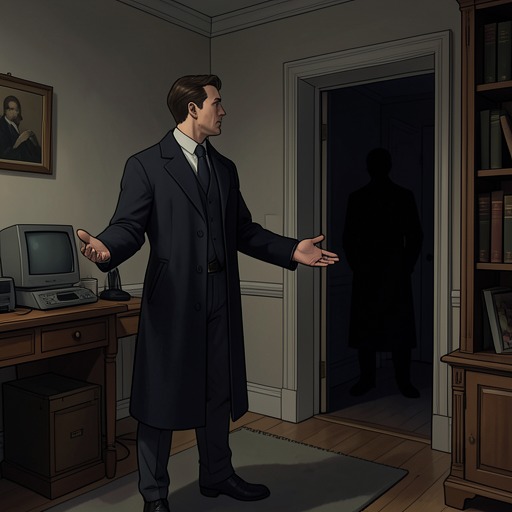
When Pip recognizes the convict in the man before him, the older bond is made unmistakable. The visitor calls Pip noble and says he has never forgotten what the boy did. His gratitude has taken the form of a life-changing gift, but Pip’s first response is not uncomplicated warmth. He hopes the man has mended his way of life and initially treats the encounter as something that might be repaid and put behind him. The scene makes the distance between gratitude as a remembered feeling and gratitude as a present responsibility sharply visible.
Pip tries to settle one concrete debt: he takes out two one-pound notes, explaining that the visitor’s messenger had faithfully brought them to him when he was poor and that he can now repay them. The man watches as Pip lays the money down, then folds the notes, twists them, burns them at the lamp, and lets the ashes fall into a tray. The gesture refuses the idea that their connection can be reduced to a transaction. For Pip, the notes are repayment; for the man, they cannot cancel the history that binds them.
The gift that made Pip’s expectations possible is revealed as a danger to its giver. The man tells Pip that he was sentenced for life and would be hanged if caught back in England. Pip recognizes that the man has risked his life to reach him, after loading him with what Pip imagines as chains of gold and silver for years. The debt therefore reverses direction: the supposed beneficiary now holds the benefactor’s safety in his keeping. Pip’s response is anguished precisely because he does not feel the affection that would make care seem natural. He admits that the man’s preservation would have been easier if he had loved him rather than recoiled from him.
Gratitude Against Shame and Self-Deception
The revelation destroys Pip’s romantic account of his own rise. He had imagined that Miss Havisham intended to unite him with Estella and that he would restore Satis House, bring light and warmth into it, and win the princess. In retrospect, he makes clear that his love for Estella was not founded on a belief in her perfection: he loved her because he found her irresistible, despite knowing that the attachment worked against reason, hope, and happiness. That self-correction sits beside the discovery of his benefactor’s identity. Pip had mistaken the source and meaning of his expectations, while the true debt was attached to a person he had learned to fear and disdain.
His first pain is not only that his hopes concerning Estella and Miss Havisham were false. It is that he had deserted Joe for the sake of expectations supplied by the convict. Pip says he would not return to Joe or Biddy, not because their comfort could not help him, but because he believes his conduct toward them has made him unworthy of their simplicity and fidelity. The judgment is painfully self-accusing: he understands that the people he had treated as socially beneath him offered precisely the loyalty he now needs to acknowledge.
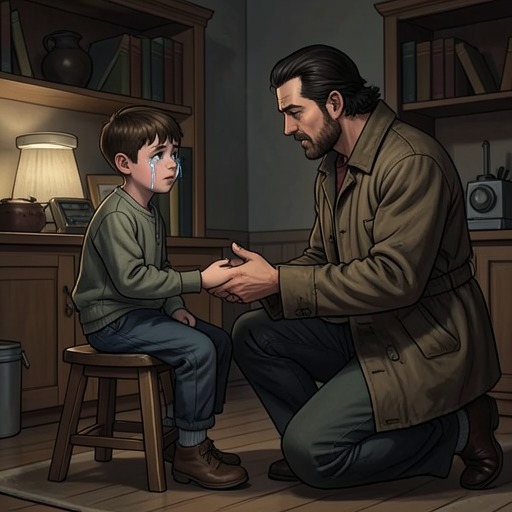
Pip’s shame about home had already exposed the change in his values. Joe had sanctified a home that Pip once experienced as meaningful; after his encounter with Estella and Miss Havisham, the kitchen, forge, and ordinary domestic objects seem coarse and common to him. Later, when Joe comes to care for him, Joe and Biddy discreetly avoid forcing him to discuss his childhood concealments. Pip is deeply moved by the tact and kindness with which Biddy has prepared Joe to handle the subject. He cannot tell whether Joe understands that the great expectations have disappeared, but the scene shows that Joe’s care does not depend on Pip’s wealth or status. Pip’s retrospective account recognizes the kindness he had failed to value while it was freely given.
Debt as a Demand for Action
Pip and Herbert understand that the returned convict’s attachment is not something Pip can simply accept or reject without consequence. Pip fears the man is strongly attached to him and protests that he already owes him a great deal; he is also heavily in debt and has no expectations or profession. Herbert answers the moral problem in practical terms: because the man has risked his life for Pip, Pip must try to save him from throwing that life away. Before attempting to extricate himself from his own predicament, Pip must help get the man out of England. Their decision turns gratitude from retrospective recognition into a concrete objective, undertaken despite Pip’s dread and financial vulnerability.
This obligation does not erase Pip’s discomfort or make the relationship uncomplicated. The convict’s tenderness and Pip’s repugnance coexist, and the narrative does not pretend that a benefaction automatically produces affection. Instead, Pip’s responsibility rests on the life risked for his sake and on the truth of what the man has done. His moral progress lies in acting on that truth even when it cannot be made emotionally easy.
Retrospective Judgment and Reconciliation
The concept extends beyond the bond between Pip and his benefactor. When Joe visits during Pip’s illness, he tactfully asks Pip not to dwell on matters from childhood and makes sure that Pip has supper and is put to bed. Pip sees that Biddy had prepared Joe for the conversation, and that both of them are protecting him rather than demanding an explanation. As Pip grows stronger, Joe becomes less at ease, returning gradually to the respectful distance that Pip’s earlier coldness had taught him to expect. Pip recognizes the cause: he had given Joe reason to fear that success would make him cold and that he would cast his old friend off.
The older narrator’s clarity makes the moral pattern especially forceful. He can name the ingratitude of his shame, the self-deception in his assumptions about his prospects, and the cost of having misread Joe’s affection. Yet recollection cannot undo the harm: Pip observes that no comfort from Joe and Biddy could now make what he had done unhappen. Gratitude in the novel is therefore inseparable from belated knowledge. Its demands are concrete—repay, protect, remain faithful, and acknowledge care—but its deepest test is whether Pip can revise the story he once told himself about who owed whom.